By Madison Lemke, June 2026 / FOCAS Intern 25-26 / McGill University
Over the past eight months, I have had the pleasure and privilege of interning at the CIDIHCA, le Centre international de documentation et d’information haïtienne, caribéenne et afro-canadienne in Montreal, Québec. The CIDIHCA has operated for over 40 years as a non-profit cultural knowledge hub, maintaining both a library and an archival collection as well as organizing many art exhibitions and community events throughout the year. My work at the CIDIHCA evolved from a digitization project to instead creating pre-digitization documents to guide future projects, and through this experience I learned a great deal about both the challenging limitations and creative opportunities unique to community archival work.
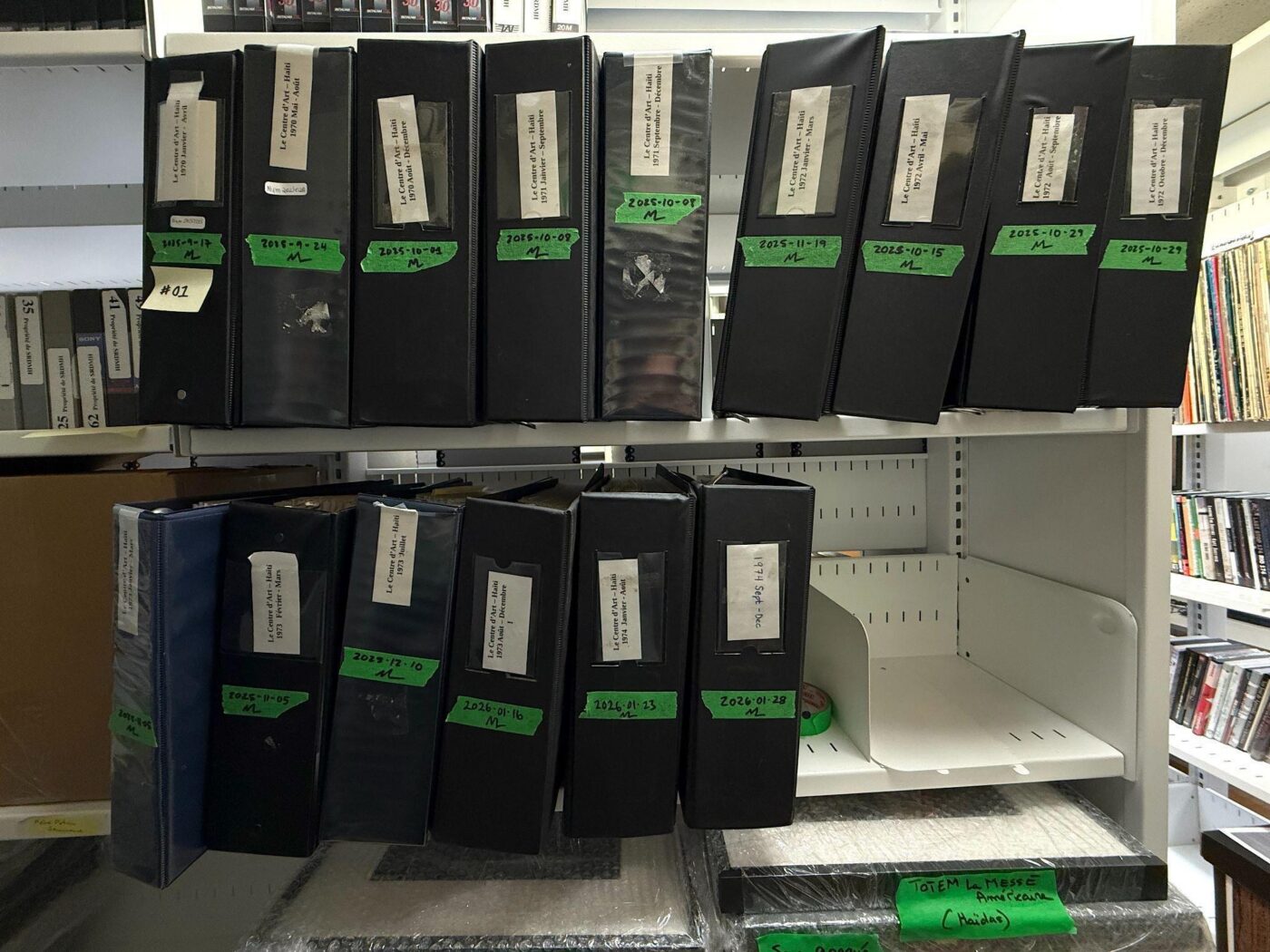
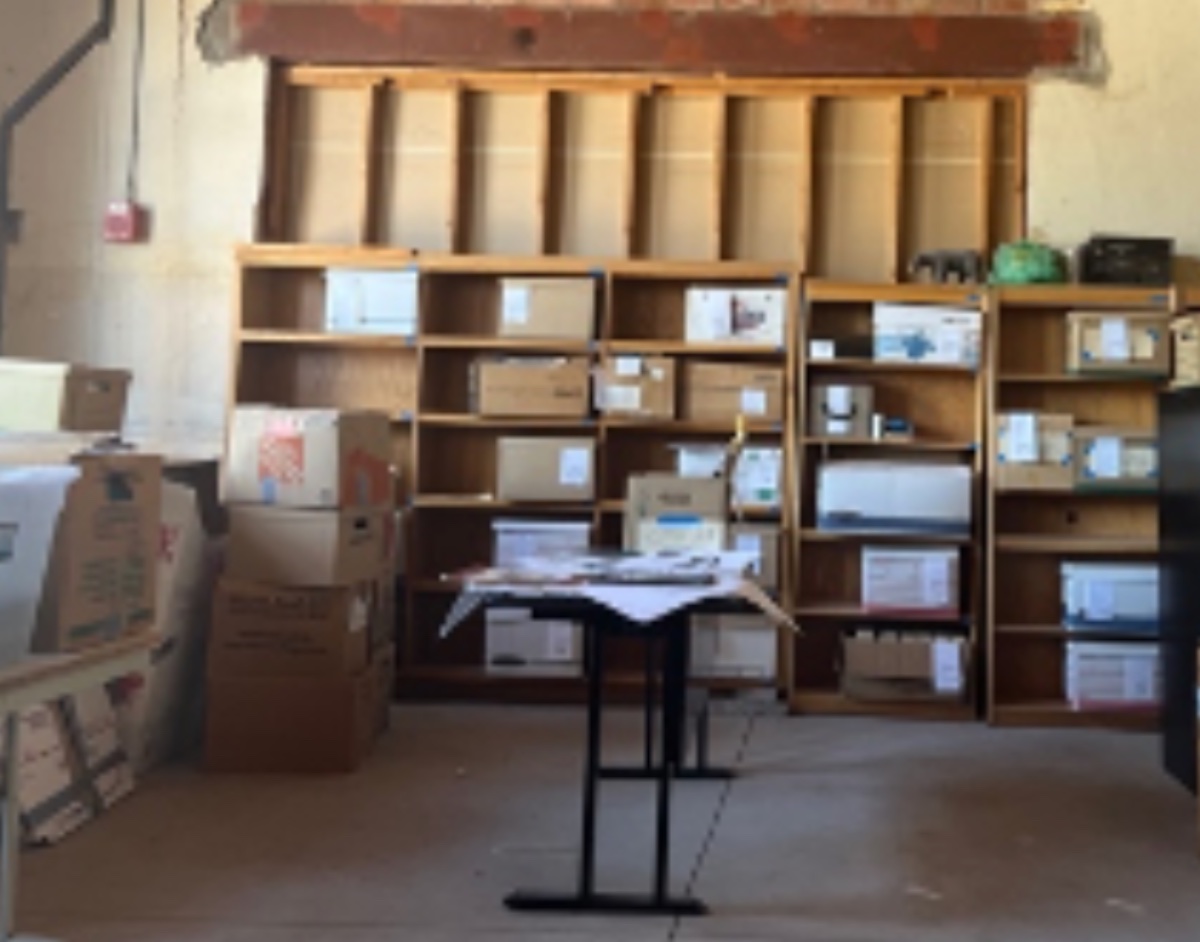
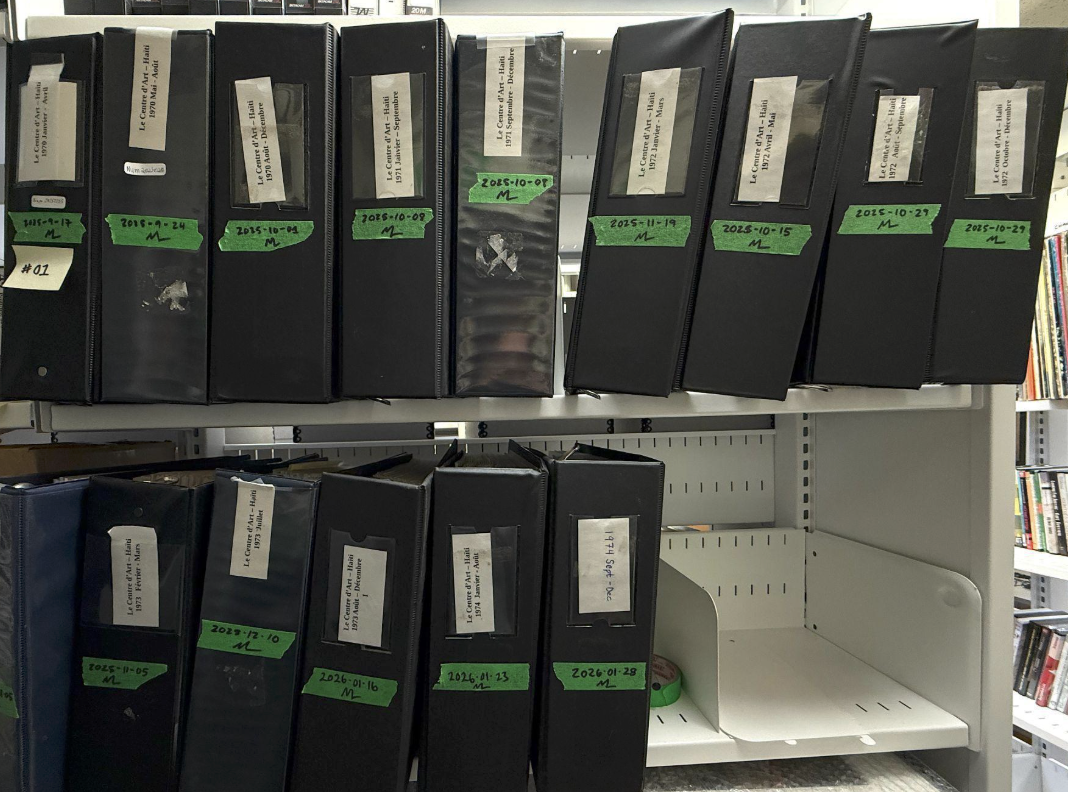
Image caption: Materials of the CAMAH collection on their shelves, labelled with the date they were added to the index.
Having a background and interest in fine art, I was particularly drawn during my initial tour of the archive to a collection of 15 binders filled with material relating to the Centre d’Art in Haiti. I learned that these materials covered a time period when the Centre d’Art built an adjacent Musée d’Art Haitien, established in Port-au-Prince in the early 1970s. Containing largely correspondence, the binders originated from the New York office of Cleveland B. Chase and were saved from disposal after his death by Frantz Voltaire at the CIDIHCA. Heavily involved with both the Centre d’Art and the Museum, Chase’s files reveal much about the day-to-day operations of these two institutions, albeit from an American perspective. As the Centre d’Art is still largely operational, I proposed a digitization project that could see these records at least digitally returned to Haiti, as they may have research value for the local community.
My supervisor Patrick and I agreed that prior to starting digitization, the materials should be thoroughly indexed with several metadata fields collected: date, creator, receiver, format, number of pages and copies, subjects, and notes. In retrospect, we could have also included a “language” field, as the records were in both French and English. We also attempted to make contact with current staff at the Centre d’Art to inquire about their digital infrastructure, so that the metadata and descriptions we created could be more easily amalgamated into their existing digital collection; however, we were not able to get in touch with them. Despite this setback, I began the indexing process and within five months had completed a spreadsheet containing 1379 unique items.
At this point in the internship, it became apparent that there was not enough time remaining to digitize all these materials as initially planned. Additionally, I noticed that the resulting data would first need significant standardization in order to be optimally searchable. The keywords I used for subjects and formats–as well as proper names of people and institutions–evolved as my familiarity with the records grew. In light of this, Patrick and I discussed how it would be more valuable to the CIDIHCA to create a model of digitization procedures that could be used in the future rather than digitizing only part of the collection with inconsistent metadata applied.
Combining knowledge gained both from my coursework and by combing through the records during indexing, my internship deliverables thus ultimately shifted to creating three documents: a collection finding aid, a digitization guide, and a list of controlled vocabularies. The finding aid was produced according to RAD guidelines, prioritizing certain fields that I was familiar with from similar projects done in my classes. It gives a contextual history of the Centre d’Art and the Musée d’Art Haitien, a biographical note on Cleveland B. Chase to whom the records pertained, and a custodial history of how they came to be housed at the CIDIHCA. This document, combined with the excel index, can now be offered to researchers as a preliminary introduction to the materials.
The digitization guide became a way for me to preserve my thinking on how the project could be completed in the future, as I relayed a proposed file naming convention, metadata schema, scanning workflow based on the CIDIHCA’s existing resources, some general notes on digitization procedures, and additional resources to consult. The guide also includes proposed controlled vocabularies for subjects and formats, though this area still needs development, and ideally in a way that includes the targeted user community. As I am a White settler bilingual anglophone, my conceptions of subject tags and formats will differ from the keywords most likely used by a Haitian francophone researcher, for example. In reading about social taxonomies and user-generated metadata, I found these controlled vocabulary lists challenging to definitively complete on my own, but proposed my ideas to Patrick for future consideration.
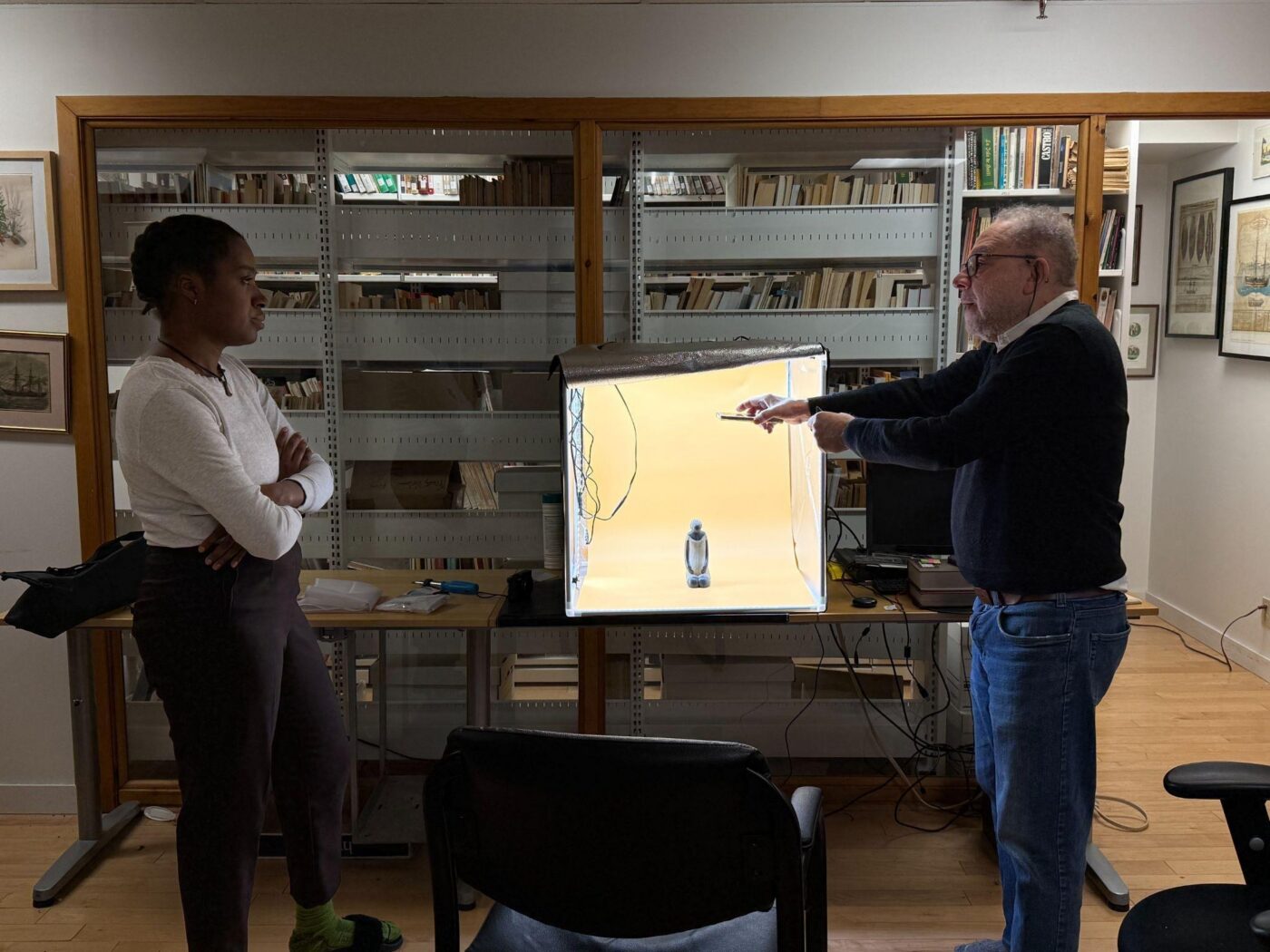
Image caption: Supervisor Patrick and researcher Kessie at the CIDIHCA archive, standing in front of a lightbox provided by FOCAS to improve scanning of oversized materials.
Overall, this internship has been invaluable for what it’s taught me about the realities of community archival work. While I was keen to immediately digitize the materials in order to make them more accessible for the community to which they pertain, my ultimate contribution was instead to produce documents that could be referenced for future collection management at the archive itself. Learning from Patrick about how the organizing principles of the CIDIHCA have evolved over time, he often referenced the need to “invent” ways of doing things in community archives, as the rigid expectations of larger institutions do not often cleanly map onto the unique materials of community archives, nor consider their unique users. My experience certainly reflects that reality, and I hope that as the digital asset management of the CIDIHCA develops further, the documents I contributed will be relevant and useful. As the internship work has now drawn to a close, I now look forward to attending the AERI conference with my classmate and co-intern Leo Jones, as we will present papers and participate in a panel discussion around community archiving in multilingual and multicultural contexts.