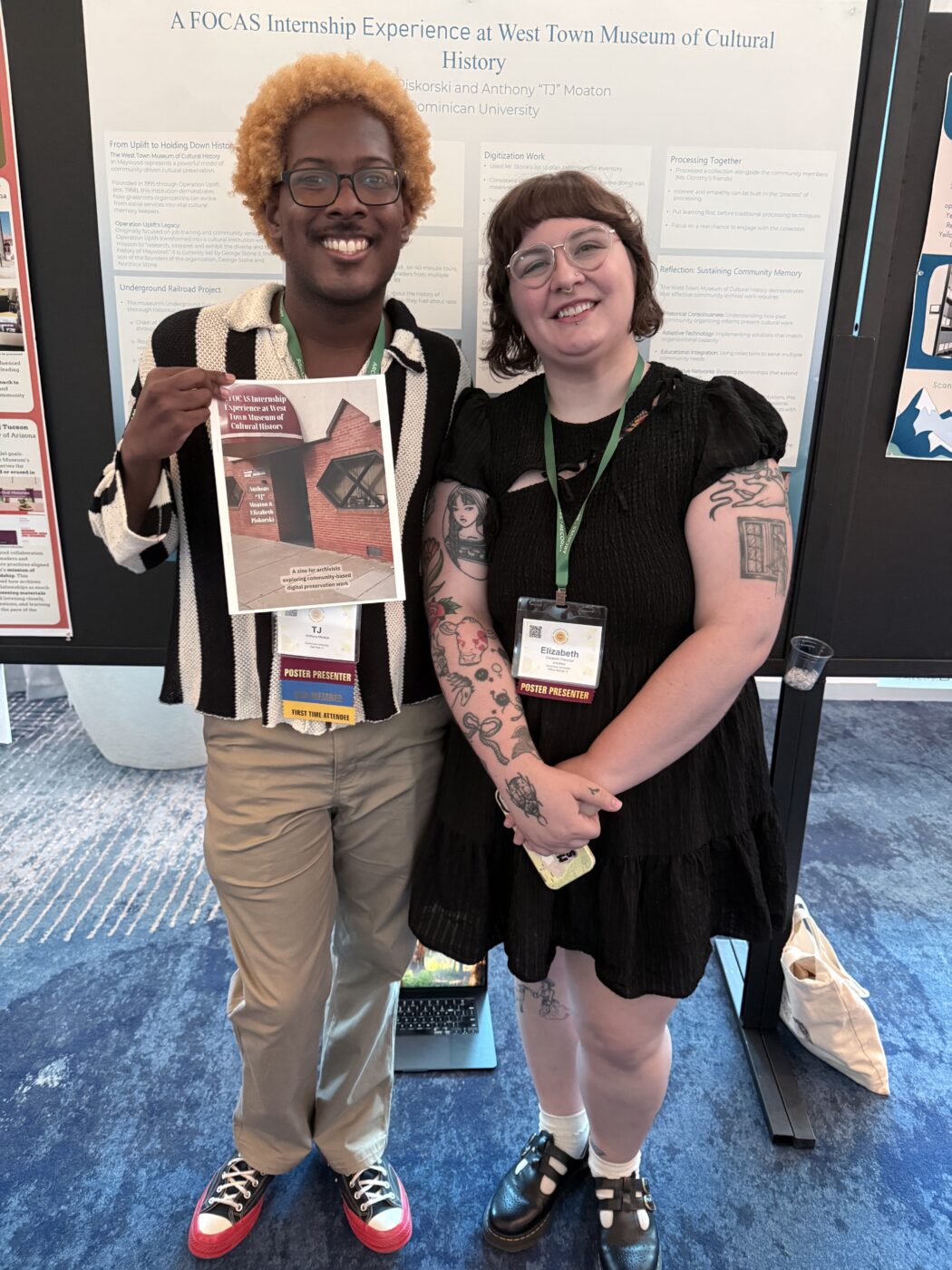
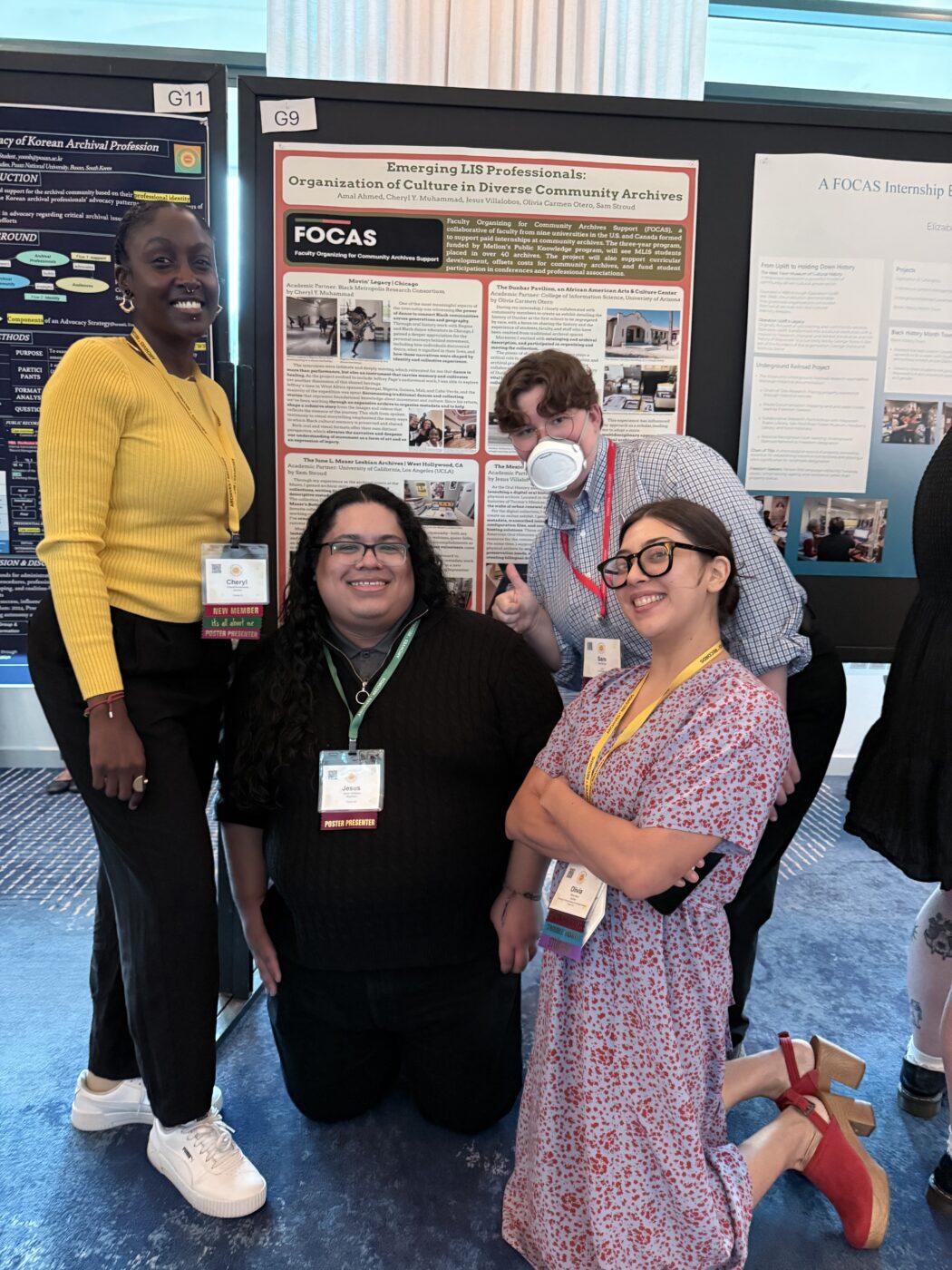


The first episode “Archives in Crisis” brings together renowned archival scholars Sumayya Ahmed, Michelle Caswell, and Thuy Vo Dang for a conversation about the FOCAS program and the urgent needs facing community archives today. The episode explores how academics, students, archivists are working together to resist erasure, and why activist archiving has never been more necessary. Listeners are invited into a candid discussion about the origins and goals of the FOCAS collective, composed of a “marvel universe of superheroes” in the field of archival studies. The episode also delves into the challenges faced by both community archives and emerging archival professionals, and how to build more sustainable partnerships between universities and community archives.
Together, these guests illuminate the complex challenges facing community archives—from financial precarity and political pressures to ethical dilemmas around institutional partnership and relationship building. They also highlight resilience, creativity, and collective action as vital forces sustaining community archival work. This episode reminds us that archives are more than repositories of records; they are living, contested spaces where memory, identity, and activism intersect.
GENERAL INTRO TO THE EPISODE
VOICE OVER
[About the FOCAS project and the podcast. Introducing the episode and our guests.]
FOCAS in FOCUS
MARIA AND AXELLE
You’re listening to Community Archives in Focus.
This podcast is brought to you by FOCAS. FOCAS is Faculty Organizing for Community Archives Support— a collective of faculty members founded in 2022 representing nine academic institutions across Canada and the United States.
Hosted by FOCAS postdoctoral researchers Axelle Demus and Maria Torres, Community Archives in Focus features conversations with scholars, archivists, and students working on the front lines of community memory. Their work centers the needs of BIPOC, LGBTQIA+, disabled, and other minoritized communities.
Through this podcast, discover how archives can empower communities and help us rethink who gets to shape history.
AXELLE
This is Axelle Demus. Welcome to the first episode of Community Archives in Focus, “Archives in Crisis,” which brings together renowned archival scholars Sumayya Ahmed, Michelle Caswell, and Thuy Vo Dang for a conversation with us (me at the microphone and Maria behind the scene). The episode explores why the FOCAS program was launched, how academics, students, archivists are working together in the current political climate to resist erasure. At a time when activist archiving has never been more necessary, listeners are invited into a candid discussion about the challenges faced by both community archives and emerging archival professionals. Together, these guests illuminate the strategies, solidarities, and reimaginings at the heart of FOCAS and discuss how communities have historically sustained memory in difficult political times.
Hello everyone! Thank for being here. Can you please introduce yourself for our listeners?
[Guests’ Intros]
22
INTRO SUMAYYA
00:02:32.710 –> 00:03:00.489
SUMAYYA AHMED | BMRC: Hello, everyone. My name is Sumaya Ahmed. I am the executive director of the Black Metropolis Research Consortium, which is hosted by the University of Chicago. My research is still primarily in my earlier focus of my academic career, which is on societal provenance archives in North Africa and the Arabian Gulf Persian Gulf area. But I’m also really interested in African American history and archives and family history.
24
INTRO THUY VO DANG
00:03:07.440 –> 00:03:26.519
THUY VO DANG: Hi, I’m Thuy, Vo Dang. I am faculty and information studies at UCLA, and my research focus is on the Vietnamese Diaspora oral history, really interested in thinking about the ways in which the ways…
… marginalized communities build community archives across the diaspora. So I’ve been doing a lot of work in the Uk recently with the Vietnamese Diaspora there, and kind of a comparative look at other sites like across the United States and back in the Mekong region of South Vietnam.
27
INTRO MICHELLE CASWELL
00:03:57.630 –> 00:04:13.919
MICHELLE CASWELL: Hi, I’m Michelle Caswell. I’m a professor in the Department of Information studies at UCLA, and my research focuses on community-based Archive Building, Archival theory and the stewardship, ethical stewardship of records, documenting human rights, abuse.
28
AXELLE TRANSITION
00:04:15.870 –> 00:04:24.739
Axelle Demus (they/them): Excellent thanks, thanks, everyone. And so today, we’re here to talk about the focus program which
… aims to place my serve information student, my serve information students into community archives for paid internships.
PART I: WHAT’S FOCAS
QUESTION 1: Why/how did FOCAS come about?
29
00:04:25.270 –> 00:04:52.270
AXELLE: Among other things, I was wondering if you could talk a little bit about why and how did focus focus come about. And if you could talk a little bit about the gaps or challenges that you saw in information studies programs that inspired you to to start this initiative.
30
00:04:53.640 –> 00:05:17.990
MICHELLE CASWELL: I’ll get started on that one. So I’ve been at Ucla 13 years now, and when I 1st started at Ucla I started teaching a community archives class and started to get to know the really rich cultural landscape of community archives in Los Angeles. I’m originally from Chicago, and I’m the co-founder of a community-based archive, the South Asian American Digital Archive.
31
00:05:17.990 –> 00:05:24.930
MICHELLE CASWELL: But it certainly took me a while to really figure out what the landscape of community archives is in Los Angeles, and to really appreciate how many community archives there are, and the incredible work that they’re doing in LA. So as I was teaching that class a couple of things became apparent. One is that our students need paid internship opportunities. So a lot of students were being offered and still are being offered internships that are unpaid that they cannot accept because they cannot afford to accept those internships. The students also were really looking for opportunities to do archival internships at places that were culturally affirming and that reflected their own backgrounds, cultures, and values. And then, as I got to know, more community archives in Los Angeles. Many community archives really wanted to work with our students, but didn’t have the resources to pay them.
[How UCLA started] And so there was this gap here, and I started having conversations with Staff at the Mellon Foundation, particularly Patricia Shui, who’s been an incredible supporter of community archives in general, and this program specifically and designed a paid internship program for Ucla’s Mlis students that has been up and running. We just finished our 7th year of that program, and we’ve placed dozens of students at Community archive sites throughout Los Angeles and overall. Those experiences have been really positive, for both the students and the sites, and many of the sites have hired their former interns now as paid staff at the sites.
So, for example, La Historia Historical Society in El Monte, the Skid Row History Museum, and archive, the Chinese Historical Society of Southern California. Those are all sites that have hired former student interns into paid positions which is really exciting.
38
00:07:23.180 –> 00:07:37.509
[How other universities got involved and FOCAS was created] MICHELLE CASWELL: And then, having conversations with my friends who are faculty at other universities in the US and Canada, and really trying to think about how the UCLA program could be scaled up.
and that other students and other community archives could really benefit from these paid internships, and not only the paid internships, but a complete rewriting of the dominant Western archival studies curriculum to reflect theories and practices that have been developed in marginalized communities over millennia, which is a big task. No easy feat there, but it seemed like, you know, a win-win for everyone involved. And so we had a zoom convening about
2 years ago, where we brought together this group of faculty from universities to talk about what might be the barriers to such a program, and how we would meet those barriers, and what the possibilities were for that program, and Thuy is a fantastic acronym generator. So Thuy came up with the acronym Focus faculty organizing for community archives support.
45
00:08:49.170 –> 00:09:10.670
THUY VO DANG: … I think the background that Michelle provided really kind of hopefully gives you a sense that it’s sort of like the marvel universe of superheroes that Michelle has assembled right to gather faculty across North America, to think strategically about how to build community archives like an international community to share resources, particularly around developing curricula that can… In the next phase, we’ll be focusing quite a bit on expanding and sharing resources on how to teach community archives across our various institutions, you know, at different scales from programs that are now just getting started, or how to embed community archives into archival studies courses. So I think that’s a component that makes this collaborative really unique in our ability to really focus on the training of students in Mlis programs.
QUESTION 2: About FOCAS Community Partners
52
00:10:58.340 –> 00:11:18.910
AXELLE DEMUS: I like the description, descriptive word that you used about the marvel universe of archival study scholars, which was leading me to the next question which I think you answered of why the specific groups, a group of academic and scholars. So now I guess I’ll ask you a little bit more about the community archives that you’re you’re partnering with.
53
00:11:18.910 –> 00:11:37.159
How did you choose those specific community archives? Did you use any specific criteria? And then the second part of the question would be more, what kind of impact do you think focus is having, or is going to have in the long term on these community archives.
55
00:11:47.450 –> 00:12:11.560
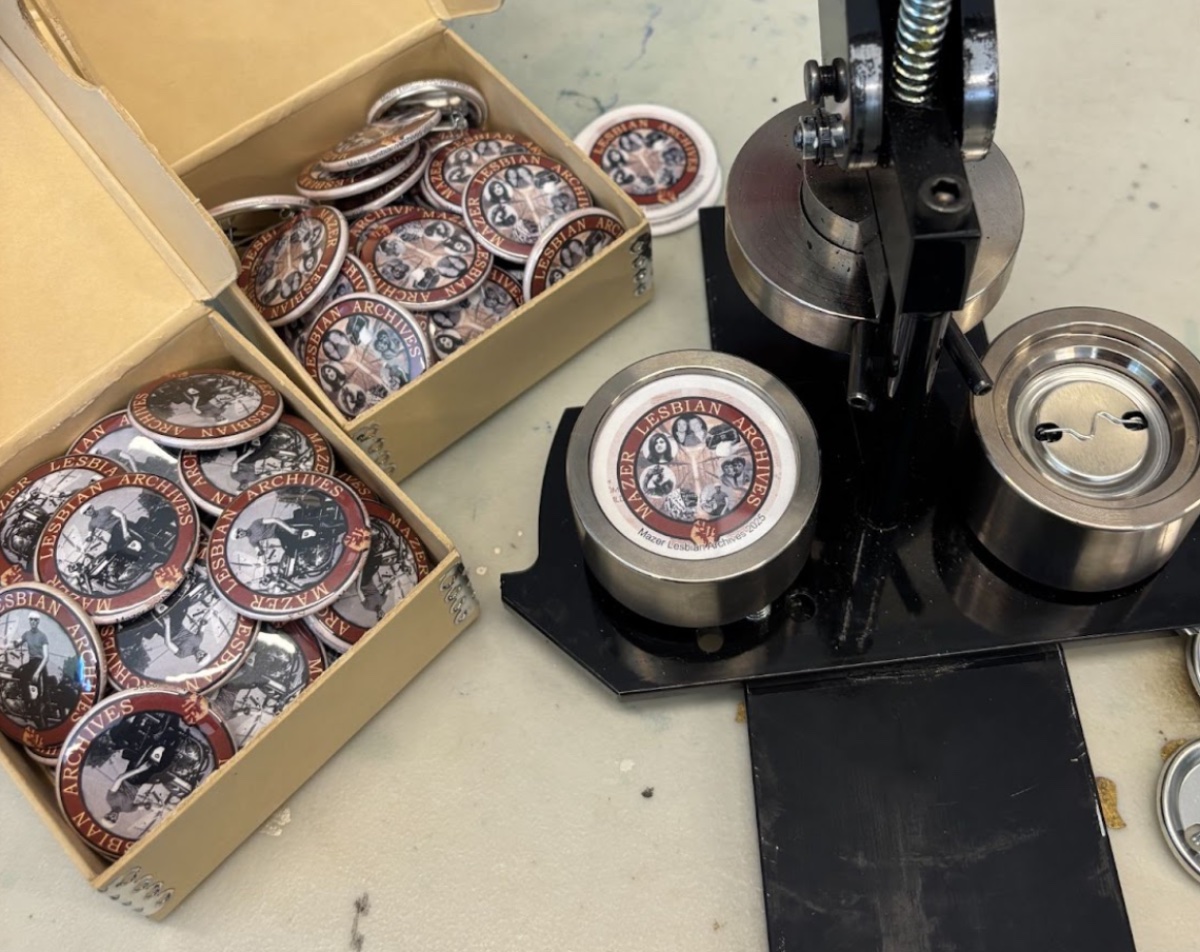
MICHELLE CASWELL: I can answer from the UCLA perspective. So there are 5 sites that are participating in this round of the internships. Those sites are the June L. Mazur, Lesbian Archive la Historia Historical Society, in El Monte, the Skid Row History Museum, and archive in downtown la Visual Communications, which is an Asian American Multimedia Archive, also in downtown LA, and the Chinese Historical Society of Southern California. And those sites are participating. It’s been a bit of a trial and error over the past. You know 7 years, 6 years trying to figure out which are the sites that have enough supervision that can really help guide the work that the students are doing, and that also have enough autonomy for the students to also work on projects that are of particular interest to them. So that is a bit of a balance. There are so many community archives in LA and around the world that are sort of just getting started, and could really benefit from having student labor. But don’t have, you know, a paid, full-time staff person don’t have the structure, the infrastructure to really support a student intern. So these are the sites that can really support a student intern, and that in the past our interns have had really good experiences at. But it has been a bit of a trial and error, and sometimes the match is perfect, and sometimes the match isn’t like any relationship between any people.
59
00:13:19.450 –> 00:13:30.800
Axelle Demus (they/them): Exactly. And just to clarify. You’re talking about the last 5 or 7 years. But that’s the UCLA program itself and focus started in 2022, and so Focus has around 40 partner sites altogether across all 9 academic institutions.
64
00:14:01.620 –> 00:14:17.260
SUMAYYA AHMED | BMRC: So the BMRC is interesting because we have this, we’re a consortium of 28 archives, libraries and museums in the Chicago area. And it’s kind of written into the rules of the game that we partner with.
We do projects and programs generally with people who are institutions that are members. So I came in with the when we got the focus grant, we didn’t have the. We didn’t have enough community archives members. We had more academic archives and these kind of things. So we had a few community archives that were members, for instance, Shorefront Legacy Center, who’s been a member of the Bmrc. Almost since the beginning, and Bmrc. Was very, was integral into them, having their original records processed through a grant that the Bmrc. Got also from the Mellon Foundation in like 2,009. We also had rebuild foundation, but we needed a few more, so I ended up trying to reach out to people. And actually some, you know, serendipitously, some community archives actually reached out to me like they saw me talking in a meeting that was not related to community archives, and somehow they saw something and I saw something. You know, we saw each other across the room. And they, you know, and they emailed me, and we started a conversation. And so they were asking me about what they were interested in from the BMRC.
And I was asking about their capacity, and whether or not they would be interested in having this assistance from a focus intern. And everyone was like, yes. So we added a moving legacy which documents, African, American, and other African diaspora dance traditions. So both archiving and documenting the dances themselves. What Tanya Sutherland calls gestural documents, but also documenting the history of different dance troops, and how they’ve learned from each other, coming from West Africa or African Americans in Chicago and other parts of the United States. So they’re documenting both the dances and the dance legacies of different troops. And who’s learned from who.
And then also, we have the National Public Housing Museum, which just opened in Chicago in April, and has really been an amazing. It calls itself a site of conscience, and it really is an amazing place, and they have a very strong oral history program where they’re trying to document the lives of the people who’ve lived in public housing in Chicago. And so we had 2 interns who worked on that. And that’s been really amazing. So this program, as Michelle has explained, is to give this professional experiences paid professional experience to help people in their careers.
But we also found, from having people working at the National Public Housing Museum, whose families had lived in public housing. There was also something like validating to see themselves, to see experiences that they could relate to. So they were getting this experience. But they were also, you know, hearing people talk about things that they could really, you know, really resonate with them from their own family struggle in living in Chicago. So I think there’s a lot of things happening, a lot of validation of people’s just their lives. That is also happening.
74
00:17:22.150 –> 00:17:46.840
THUY VO DANG: Yeah. And I’ll add that I think so many of these as we know. It’s a pretty well known fact that community archives struggle with building capacity, having support and expertise to maintain their community’s history. And so, being involved with a program like this, you know, one of the things that focus is able to do is carve out a big chunk of our grant to pay the community archives, partners as well as the student interns. And so it’s so important to create these channels right where we’re both diversifying the field or the profession and then helping to build sustainability for community archives to then go out and seek funding or potentially hire these interns into their programs. So I think the vision is one that I think is grounded in this commitment to care work. That is long term. We see the work is slow.
And the Mellon grants have been in increments of like 3 years, but they’ve been very, very supportive of collaboratives like ours.
And so, aside from focus, you know, we know, like the community archives collaborative, or the program that I co-developed at Uc. Irvine, called the Community Ccap, which stands for community centered archives, partnerships which tries to bridge academic libraries with community organizations, and that program is trying to fund other academic libraries to replicate this kind of intentional support for community organizations, to preserve histories in place rather than to accumulate more collections for academic libraries. So I think you know, from all of these entry points all of us are thinking through. You know how to build a future where we have groups that have been historically marginalized, that are able to represent themselves on their own terms where they want to be represented.
QUESTION 3: Relationship building with Community Archives
81
00:19:31.300 –> 00:19:51.870
AXELLE DEMUS: So you mentioned you just mentioned care work as part of the ethics that drive the focus program. I was wondering if you could talk a little bit more about that relationship building process. You mentioned that it’s something that’s slow that takes time, but also works within the parameters or takes place within the parameters of a grant. So how does that work in terms of your ethical commitments to community archives? Can you talk a little bit more about that relationship building process? Especially because community archives might perceive universities, as you know, outsiders to the work that they do, or that there is an imbalance in terms of power here. So if you want to talk a little bit a little bit more about that.
84
00:20:20.450 –> 00:20:46.869
THUY VO DANG: Well, I can start, and then I’m sure Michelle and Sumaya will have really important things to fill in. I think care, work, and mutual aid are things that this Mellon Grant has enabled us to do on a large scale in a very visible way, so that helps us to build a case of the university, and you know we’re at UCLA. So we come from a public university that has a responsibility towards Los Angeles and the region, and is slowly transforming some of its practices around community engaged scholarship, and Michelle has been such an important advocate for that on my campus. I think that for very, I mean, for historical reasons, communities that have not been well supported by institutions like universities, have not been represented in their collections. For example, don’t have a natural built in trust for these institutions. So we have to proceed from the understanding that trust building will take time. We have to continue to show up and be willing to do the work. That’s perhaps not the most glamorous, or even well rewarded or acknowledged work. Right? So some of it is just like handling the logistics so that our community partners get paid right, being willing to put in the hours that it takes to, you know, carry forward a grant all the reporting work right and not putting that off on our community partners.
And then also being very transparent about how clunky and messy and slow the university is when it comes to building systems that can help support a community in all its forms. Right? The university might recognize a 501 c. 3. Nonprofit. But it may not recognize a smaller grassroots collective that doesn’t have a nonprofit status, and so our work often becomes like the work of mediating those dynamics between the university’s bureaucracy and the community partners to make sure that there is equity, and that their labor and their experience and expertise is valued.
92
00:22:42.290 –> 00:23:01.119
MICHELLE CASWELL: Yeah, no, I mean, Thuy said it best. I’ll just add that. How important it is to pay community partners, and how often that’s difficult in a university bureaucracy to figure out how to get that payment processed. But that is the work, that is. it’s the most important care work, even though it seems like really bureaucratic and annoying. To deal with getting that check cut is like the most important thing you can do to build trust between a university and a community organization, and that’s just really, really important in these kinds of partnerships between universities and community organizations.
And also, I think, for me, thinking about how, like many of our students are from the communities that are served and represented. Many of our faculty are from the communities that are served and represented. So even though the students and faculty represent these large institutions, they’re also part of the communities. So to try to think about that relationship between the university and the community is not necessarily such like a hard and fast binary relationship.
98
00:23:57.900 –> 00:24:17.499
SUMAYYA AHMED | BMRC: … the black metropolis research consortium was started in 2,006 by a then dean at the University, but it was transformed into an independent organization that has an mou with the University of Chicago, and is hosted by the University of Chicago, meaning the University of Chicago, is our fiscal host, that causes a lot of kind of complications in trying to make community engagements and in trying to explain who we are and what we do. And then also, then trying to explain, focus on top of that, I do feel like a door-to-door salesman. Sometimes there’s a lot of
yes, I’m from the BMRC. And then they see the University of Chicago. And then I’m like, yes, and I’m part of the University of Chicago. Sort of. And then, Ok, but there’s this other grand yes, and there’s Mellon, and there’s Ucla. And so I think sometimes you just kind of like. Just bear with me.
There is, and the University of Chicago does not have a very positive reputation in the city of Chicago, and especially not in the south side, and especially not with people of color. It has a very negative well-earned, negative reputation in the city of Chicago. And so a lot of the trust building has just been being around like, as Michelle said, making sure the checks come on time. Now, that’s been kind of tricky because we are dealing like the bureaucracy of an institution. And so people need money. Not necessarily. In times when the university’s pace times happen.
There has been, you know. Sometimes you just have to pivot and think kind of outside of the systems like, how can we get money to people and then figure out this accounting later, because we’ve promised something. But I think what has worked is that we show that we want the best for people, that there’s no ulterior motives, ulterior motives for us. We’re not trying to get something from people. And I think a lot of people do have a relationship with universities coming as researchers, trying to get information and then never coming back. And I think showing that no, we’re just here to support what you’re already doing like we’re not asking anything from you. and just showing support for their mission. What they’re already doing, I think, has been very helpful.
PART II: COMMUNITY ARCHIVES IN THE PRESENT MOMENT
QUESTION 4: About the current political climate
108
00:26:20.080 –> 00:26:46.409
AXELLE DEMUS: that leads me to the next question about you know our current political moment, especially in the United States, where things have become more and more precarious for the various communities that focus is supporting. And so I was wondering if you could talk about how the current political climate has impacted the project. Your universities, your students, and and how you think it’s going to impact maybe the funding for the project. If you have any thoughts that you’d like to share about that.
111
00:27:05.420 –> 00:27:08.770
MICHELLE CASWELL: I think the work is more important than ever and many of the communities that are served and represented by community archives have been again for millennium, doing memory work in even more challenging political climates. And so I think they’re resilient and autonomous. And you know I was part of several Imls grants that were funding community-based archives that were cut and that was really difficult to experience those cuts. But I always go back to what Samit Malik, who’s the executive director of Sada, South Asian American Digital Archive says, which is that the Sada is run and funded primarily by community members, and that’s not going to change right? And so, if the point of community archives is for communities to autonomously document and steward their own histories, then, you know, having Federal funding cut is not going to change the resolve to do that and the ways that they’re doing that. So for me it is just underscored even more. How important it is for these organizations to be autonomous.
118
00:28:40.730 –> 00:28:52.709
THUY VO DANG: I think I mean I’ll also add that as much as like it’s kind of renewed for many of us the sense of purpose in doing work that resists historical erasure.
We, I think, are also very aware of how we need to hold and attend to our communities. Various needs. Right now, for example, I do a lot of work in the Southeast Asian communities in Southern California who are a target of ice raids and deportation. And so just, you know, thinking about, you know, what are the strategies and skills and knowledge that we have? Those of us who do memory work that might be useful at this time, and to offer that support.
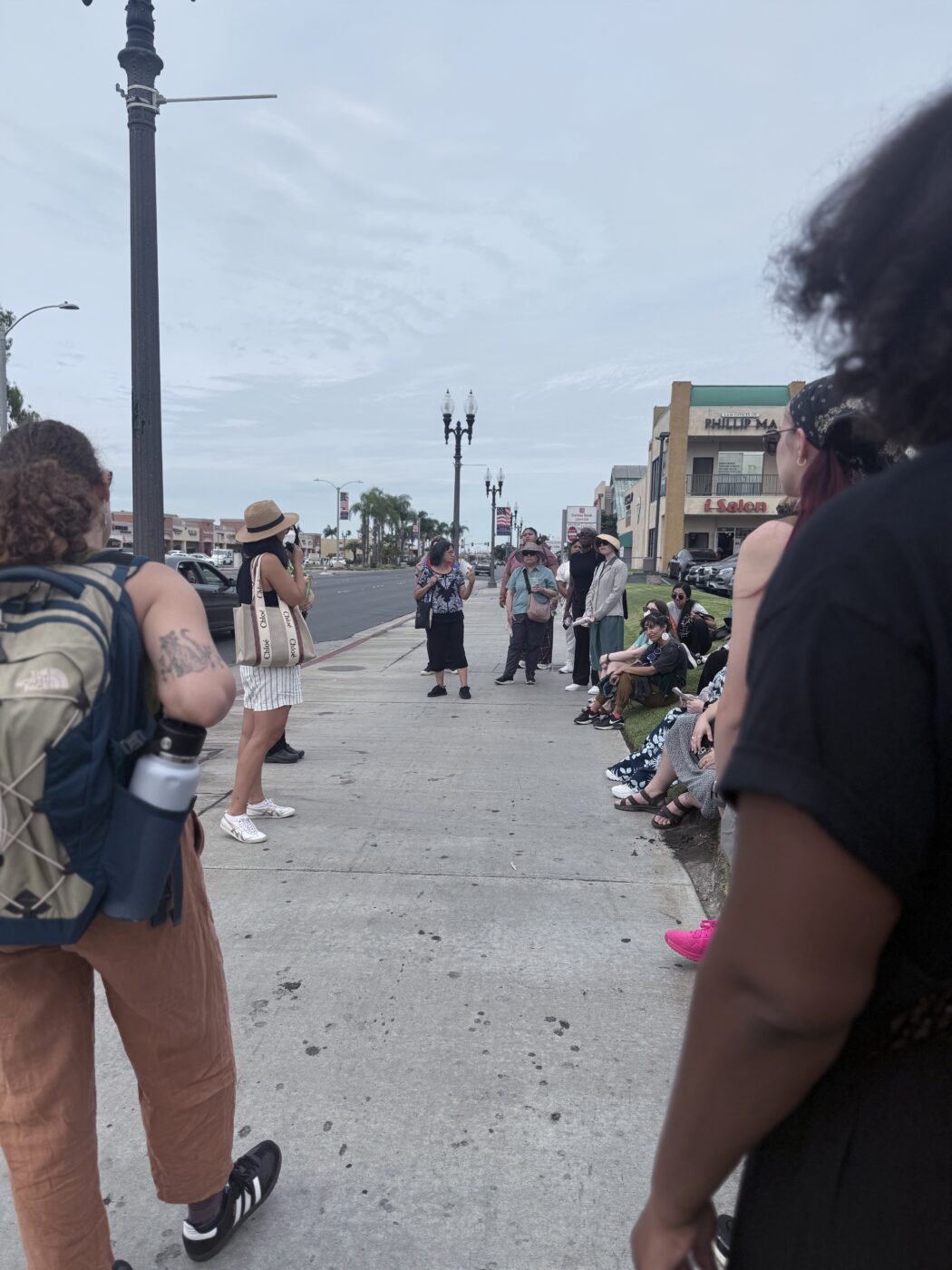
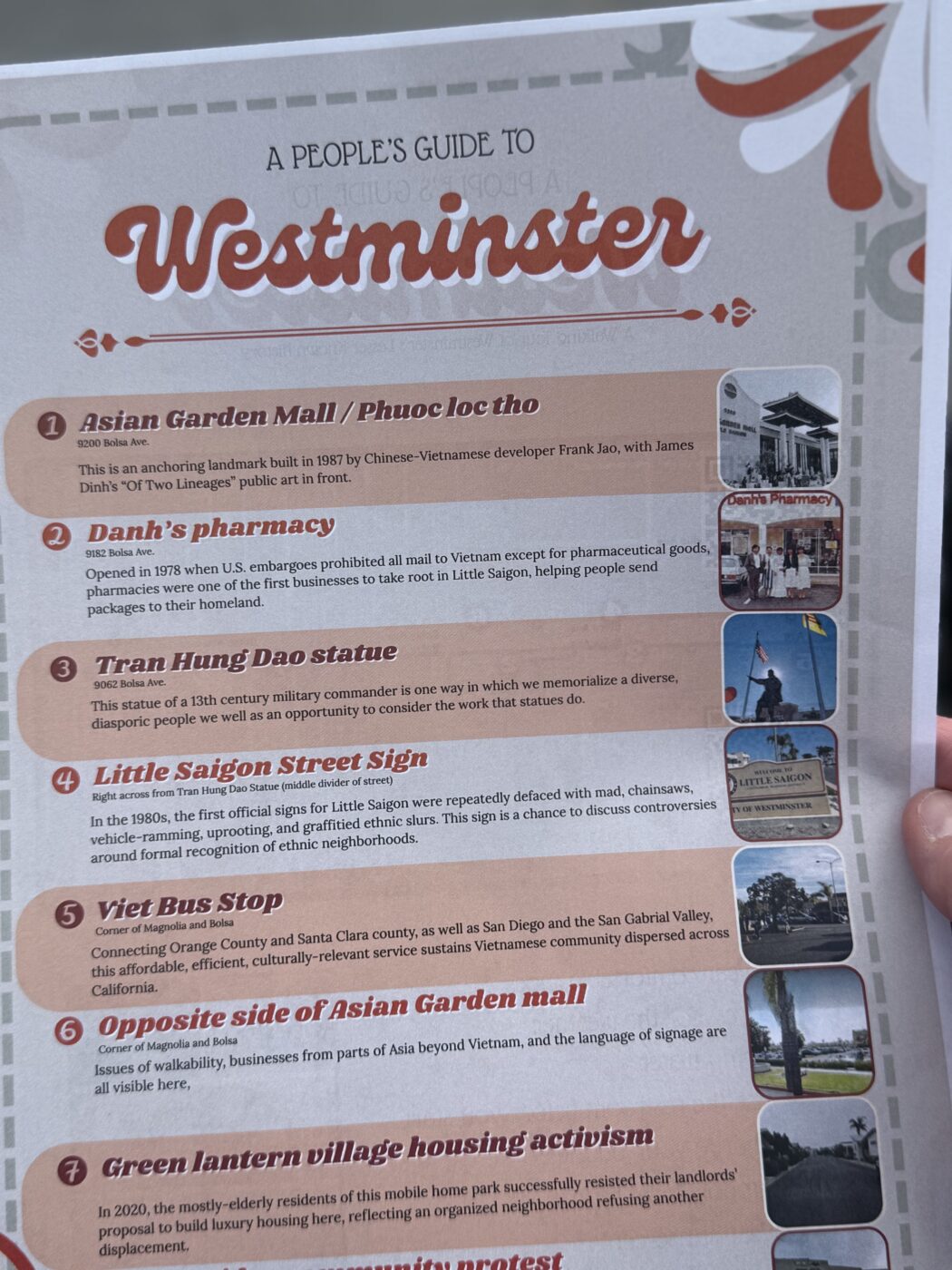
One of my you know, one of the things that we’re doing, actually, that’s coming up for our 1st year. Convening of focus is a walking tour of Little Saigon here in Westminster and Orange County, California, which is the home of the largest Vietnamese diaspora community. And so I’ve invited a group that’s been doing a lot of direct action around educating the community around their rights when they’re approached by ice agents or the police, and they’re going to be included in our walking tour and get to meet the faculty and the students in this collective, so we can learn from them.
And you know, I think that now is the time for us to think about how to work flexibly and responsibly, and you know, for our students to who come. Some of them come from these communities and are at risk. I think, also recognizing that they might be vulnerable. And you know we we do. We’re extremely flexible when it comes to, I think, working with marginalized and vulnerable communities. I think that’s what like because of of what is at the heart of the ethos of community archives work. I think we’re able to be much more responsive and caring in this context.
00:31:14.670 –> 00:31:31.590
SUMAYYA AHMED | BMRC: So I would say, you know, the current moment is just a reminder of how precarious we were all along, and I don’t think that any person who’s from a marginalized existence ever thought that like, you know, they, you know, they’d finally made it. And like things were what we’ve learned recently. So obviously, there’s some grants funding. We didn’t lose any grants, but there were some things we were hoping to apply for that we are no longer eligible to apply for. And people have given us condolences because we actually have the word black in our name. So like we can’t like, some people can change things around, or you know there’s no get around having black in your name, which I have no problem with.
as James Brown said, say it loud. But I think one thing so we have seen the I would say, the the loss of public solidarity from people who, when it was to their benefit to be our friends. or to show us off as a partner. So we have people who are now more shy to do that, or who have actually refused to do that, or who have taken down things related to our history, because, you know, they’re afraid of repercussions. But for me it goes back to what a lot of racial theorists talk about in terms of the idea that in the United States at least, people of color are always seen to be within the obviously within the white supremacist mindset. We’re always extra like we’re always the people who don’t really have to be here. And so that’s why we can be deported or shot in the back or starved to death because we’re just not the main stage, right? And so it’s just a reminder for us, and, as has been said before, we’ve been here before.
our people have all been through way more than this, unfortunately. And so we just you know, we’re just, you know, we’re taking notes. And we’re using the resources that we’ve always had internal resources, community resources and doing the work to the extent that we can.
QUESTION 5: How to Support Community Archives
136
00:33:30.570 –> 00:33:54.649
AXELLE DEMUS: Thank you, and I guess you mentioned that the work that focus is doing feels more important than ever, perhaps, or at least you feel validated that the work that you’re doing is important at the moment. Do you have any advice for how to support community archives better in this precarious political environment, for people that use community archives or for people that are interested in community archives or students that are going into master of information studies programs. If you have any thoughts on that support, your local community archives.
139
00:34:18.309 –> 00:34:22.769
MICHELLE CASWELL: I think the work is both urgent and slow at the same time. So it’s trying to figure out how to operate in both of those modes simultaneously, I think. getting involved in the work of community archives and asking the leaders of those organizations, the community members that work there or volunteer there and support those organizations already what they need, and then listening and being responsive to their needs. So having them really drive the work rather than impose that work from, you know, an external body.
143
00:35:00.370 –> 00:35:12.679
SUMAYYA AHMED | BMRC: I would say money. Some of our partners did have Federal funding, and so they did lose money, and so just reminding people to donate, and you know, $5 here, I would say, you know. you know, there is a very famous Presidential campaign that started off with people just giving a little bit of money here and there, and I think Michelle’s the Sada archive is an example. Right of community support a little money here and there, and so I think we shouldn’t underestimate what our $5 or $25 can do. And so just really encouraging people to still donate. And I think emotional, vocal public emotional support. I really that it goes a long way. So give some money and then show that you love someone in public. you know. You know, that’s nice to send a nice little thing. But you know, if you’re if you’re you know, I think that we really need to.
There’s a lot, you know. We take in a lot visually. We take in a lot through our senses, and a lot of isolation people feel is publicly is because of their absence from the public sphere, right, which is what community archives are trying to work against. And so I think we need to show publicly our support for these communities and and publicly our support for the work that they’re doing and publicly validate their existence and show solidarity. And it’s nice to send a nice, you know, to do things I’m not saying not to do the private things, but I think right now, especially public support. Vocal support really goes a long way as well.
PART III: CONCLUSION
QUESTION 6: What is the most important thing you want people to understand about FOCAS
168
00:42:26.980 –> 00:42:52.789
AXELLE DEMUS: I guess we’re going to reach the end of our conversation. And I have a couple of questions to conclude, what do you think is the most important thing that you want people to understand about focus? And what do you hope to achieve with the grant in the next 2 years, as the grant concludes in 2027?
170
00:43:15.950 –> 00:43:20.619
MICHELLE CASWELL: I on the curriculum side, I would like content about community archives to be made integral, fundamental to any archival studies education, so that you’re not just learning about independent minoritized identity based community archives in a specific community archives class, or in week, 15 of a 15 week semester or week 10 of a 10 week quarter. In the case of UCLA, we’re in the quarter system, but that from the very start we take very seriously theories and practices developed by community archives, and that content is then addressed and fully integrated and centered in any kind of lis curriculum, any kind of archival studies curriculum. So in your preservation class, you’re learning about practices that are developed by community archives in your description class, you’re learning about descriptive practices that have been generated by community archives very creatively to represent their communities, so that it’s again fully integrated as any other kind of archival institution might be in an archival studies curriculum, so that students from marginalized communities can very clearly see themselves and see that they belong in this field. So there’s that. That’s the curricular component of it.
From the community archives side, I would really like to see community archives supported, to have more resources, to be able to hire more staff and to to be fully supported in the work that they’re doing financially and our students as well. I would really love for all of the students to be able to get. You know, well-funded positions at community archives, and even if their positions are not at community archives, that they take the perspectives and lessons that they’ve learned from their internships, regardless of the kind of institution that they work for.
179
00:45:31.410 –> 00:45:56.639
THUY VO DANG: And I would hope that faculty across the North America, across the world who teach archival studies might see. You know, if we’re thinking about that kind of marvel metaphor. If we’re building this base of superheroes who know how to do community archives that they don’t see that as exclusive that it really is. And I, you know, theory and practice that’s for them as well, so that to grow this legion of Cape wearing superheroes across the multiverse.
QUESTION 7: Advice for establishing similar networks in other contexts?
181
00:46:03.060 –> 00:46:16.959
AXELLE DEMUS: Do you have any advice for folks that are wanting to establish a similar network as focus? Maybe in a different context, maybe in Europe or Asia, or different geographical context and political sociopolitical context, as well.
183
00:46:21.150 –> 00:46:27.130
THUY VO DANG: My 1st thought is like, Don’t do it alone, you know. Find yourself some like-minded folks. Because this work shouldn’t be done in isolation or in the, you know, archives often use that phrase loan arranger right where we work best when we’re able to kind of think through issues and challenges with others. So gather yourself, good people around you, and try at whatever scale you have. You may not have any funding. but you can try with one relationship at a time, right? One organization or community partner at a time. You can test the waters and bring others along and build a base of support around it. Locally.
186
00:47:08.130 –> 00:47:37.909
SUMAYYA AHMED | BMRC: I’m not sure that this model would work everywhere in the world, right? So they’re just local realities, levels of freedom of expression, levels of freedom, of engagement or coming together. And obviously it might not work in the United States. But one thing just to your earlier question about what’s the most important thing when people understand about focus. And I think that Michelle and Tui raised a lot of good points, but also just giving people an honest chance people who are not necessarily being used to giving chances. And so I think this this is not just for the students, interns, but also for the community archives. Some of them are just not the idea that they would get this assistance to do their work, and then they would also get this support for some of them. It’s just. It’s just something like that never has happened to them, you know, professionally, or even their personal. You know, they just have not been just given things that they didn’t have to like, beg or plead, or just really or protest, for. So I think that’s another great thing about just giving some people relief. I think we can’t over underestimate the psychological benefits of just letting of the relief that is given to a student who now has the ability to do things or community archives is not able to buy some supplies or pay themselves. And I think that’s also a great benefit, and that I hope that will continue somehow.
190
00:48:43.200 –> 00:48:45.737
AXELLE DEMUS: Keep applying for grants… (hahaha)
191
00:48:46.160 –> 00:48:54.819
MICHELLE CASWELL: Yeah, I have a really specific example that I think, just maybe highlights the impact that I want focus to have. It’s a very again, very specific small example. But it’s a lens for me to think about. So 2 years ago one of our student interns was named Bianca Sosafal, and Bianca was placed at La Historia Historical Society in El Monte and La Historia is an incredible, amazing organization that does so much with so little financial resources.
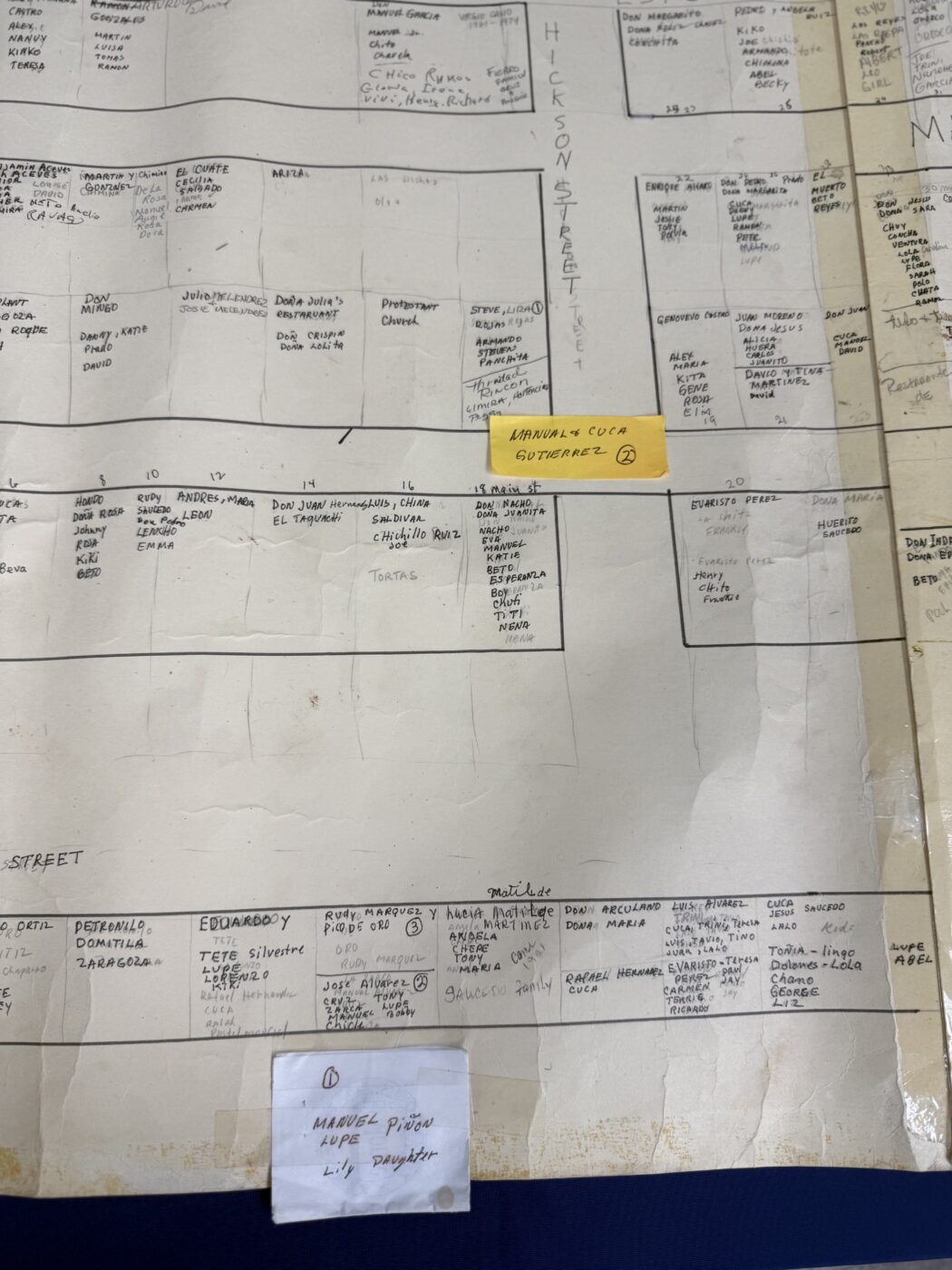
La Historia is in this area El Monte, east of Los Angeles, that until the 19 seventies was divided into 6 different barrios, 6 different farmworking camps that were then demolished, and one of the incredible artifacts that La Historia has is a hand-drawn map. That’s huge. A hand-drawn map of Hicks Camp, which is one of these barrios where people lived and built their lives for generations. and this hand-drawn map, you know, has a detailed list of who lived, where? Who went to church, where people hung out, where people ate, where people celebrated. And this map was rolled up and stored in a building for who knows how long decades, and with Bianca’s help it was clear that this map needed to be laid out to best be preserved.
Bianca’s mom is a seamstress, so Bianca’s mom sewed these weights, these hand sewn weights that are being used to very gently flatten out this map that had been rolled up, and to me it is such a symbol of care and a symbol of knowledge that is from within. The community, like the community, knows how to do this work. They have the skills and the knowledge to do this work. And for Bianca, just to be able to make that connection like, here’s what we need to do this preservation treatment. Oh, my mom knows how to do that! and to connect the dots is incredible to see. And for me, I want all the students and all the community archives, and all the faculty to have those kinds of care practices made integral to the work of of stewarding archives.
So small story, but a bigger lens for me of like this is, this is incredible work. I want everyone to to be able to do this kind of work.
QUESTION 8: Where we can learn more about FOCAS
202
00:51:29.450 –> 00:51:33.870
AXELLE DEMUS: Wow, that was like, yeah, a really incredible moving story of community connections, family connections and larger questions about heritage like weaved into one story. So thanks for sharing Michelle.
I have just one last question for every for one of you. If you can tell us where people can find more information about focus and learn more about the various internships and projects that are underway as part of focus.
206
00:52:29.280 –> 00:52:54.619
THUY VO DANG: We have a website coming soon. However, I mean, all of our member institutions have their own spaces right under landing pages where you can learn more. For example, the Ucla Community archives Lab and they’ll be linked out from Focus’s main website, where you can read intern blogs where you can get access to toolkits and publications. It’s pretty easy to find.
GOODBYE 2 THE GUESTS
207
00:52:56.340 –> 00:53:17.950
AXELLE DEMUS: So the website is archivalfocus.org. And it lists all the partners and universities that are part of focus, and all the members as well. Well, thanks everyone. This has been a great conversation. Thank you for again joining us in this very first podcast about FOCAS. And I do hope that the work that focus is doing the incredible work that focus is doing gets to reach more people. Because I truly think that it is a very timely intervention, and everybody is doing such incredible work at their respective institutions.
So thanks again for joining us, it’s been an absolute pleasure talking to you all.
EPISODE CLOSURE
VOICE OVER
[Concluding Maria and Axelle voice over]
AXELLE
As we conclude this first episode of the FOCAS podcast, we reflect on the urgent realities confronting community archives today. Our guests have illuminated the complex challenges facing community archives—from financial precarity and political pressures to ethical dilemmas around institutional partnership and relationship building.
They also highlight resilience, creativity, and collective action as vital forces sustaining community archival work. This episode reminds us that archives are more than repositories of records; they are living, contested spaces where memory, identity, and activism intersect. As we move forward in this series, we invite listeners to join us in thinking critically about how to support, participate in, and amplify community archives as vital sites of history and memory.