By Riqué Duhamel Escobedo, FOCAS Intern, Fall 2025 / University of Arizona
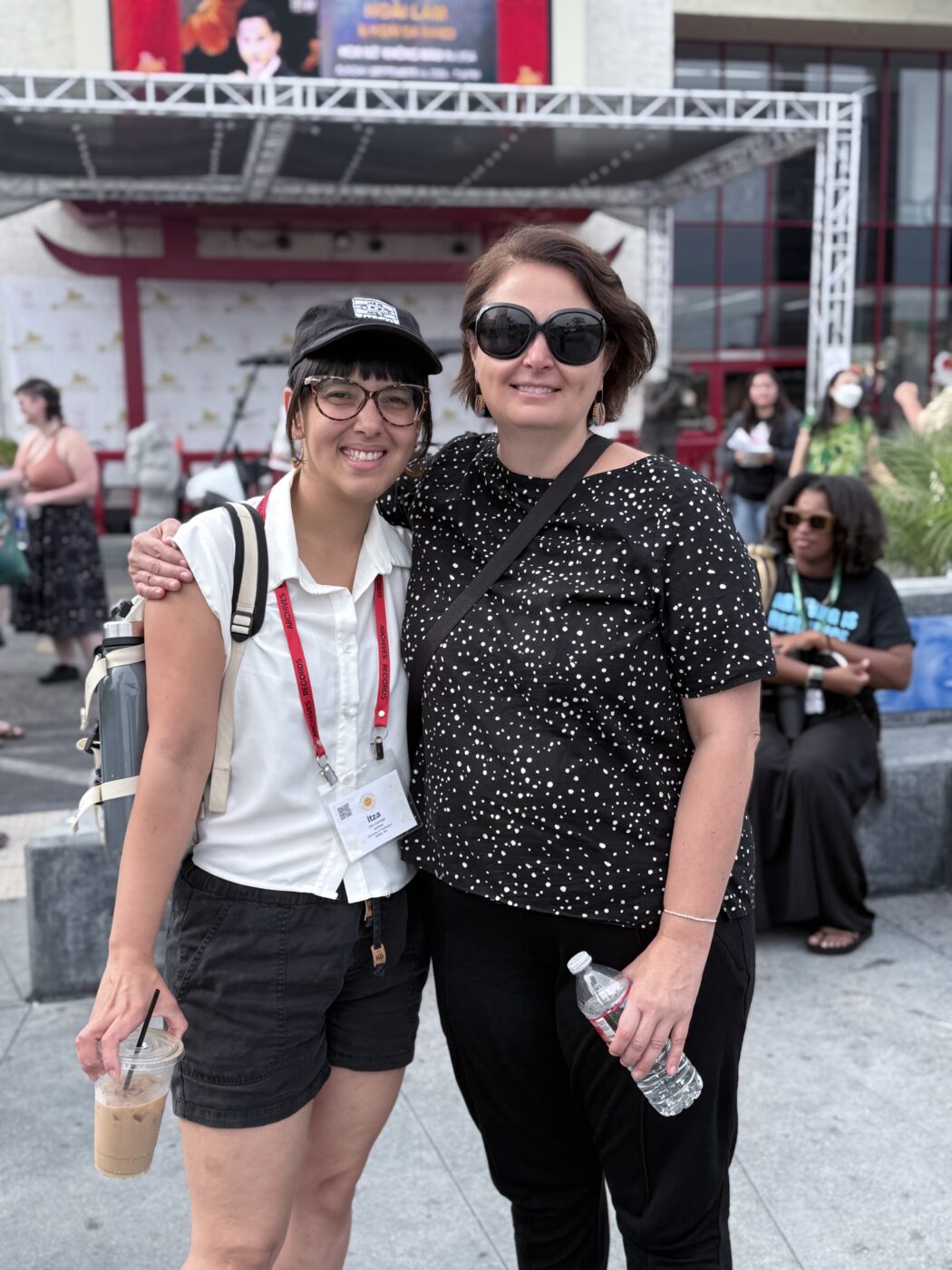
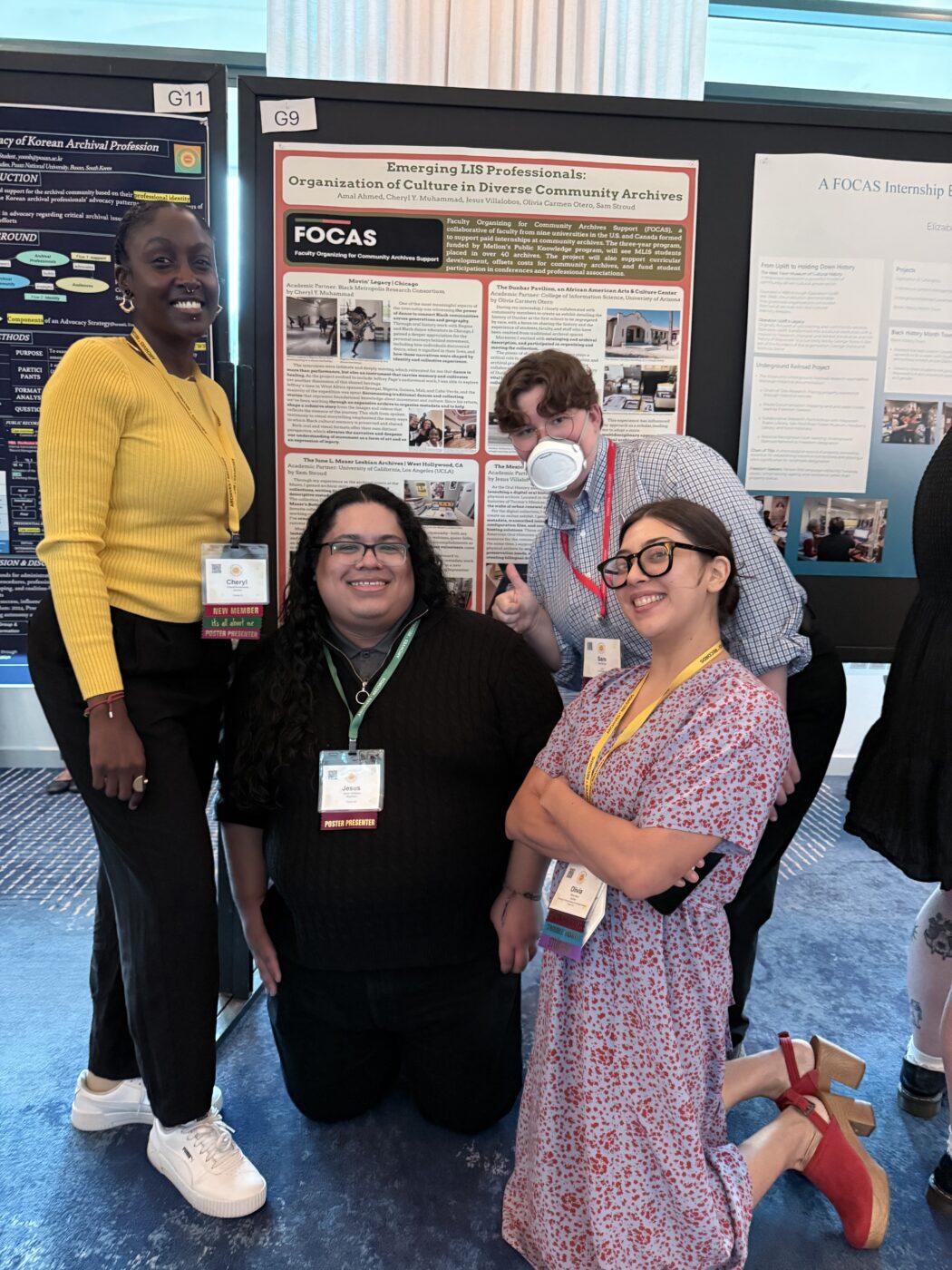
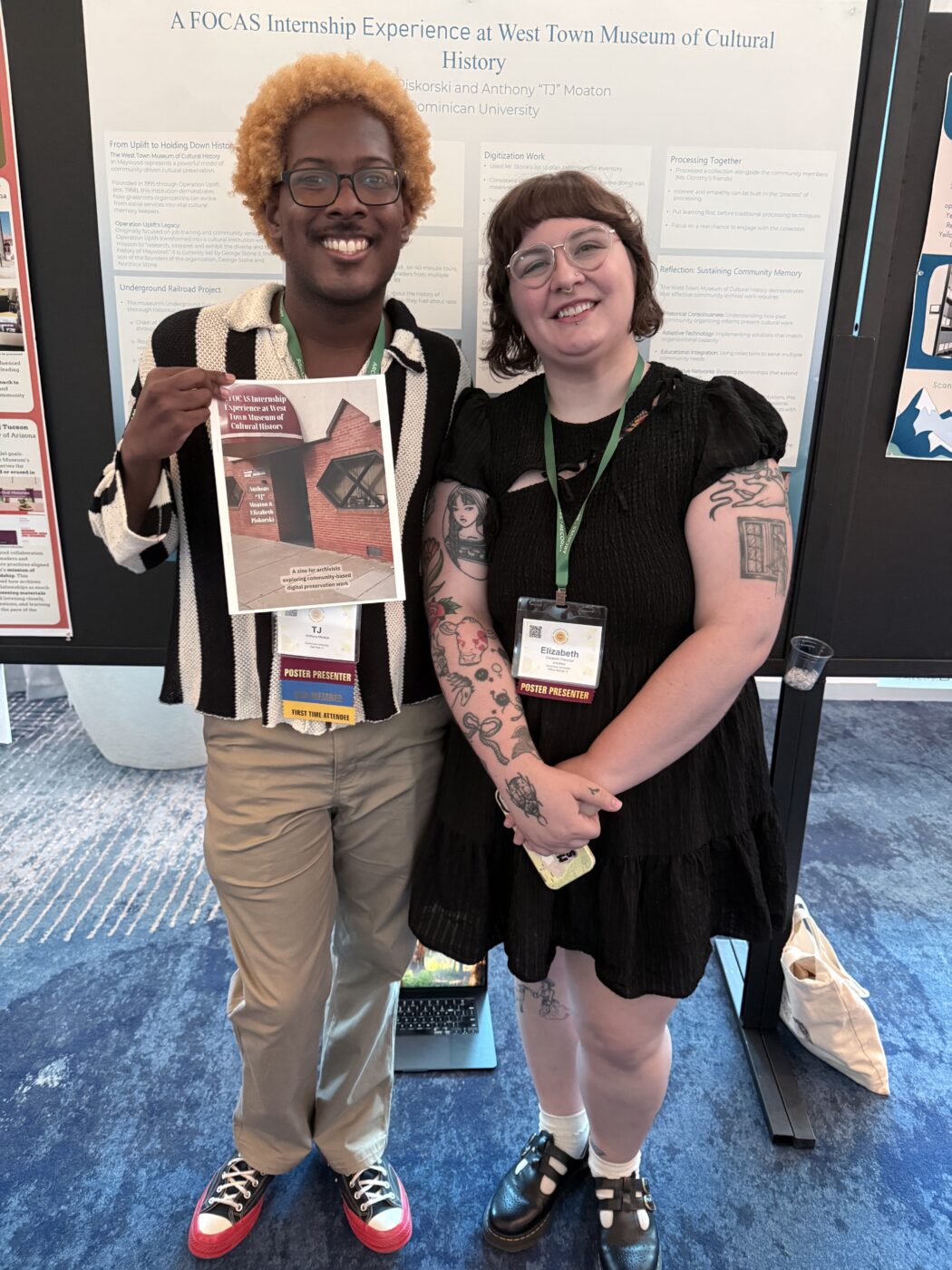
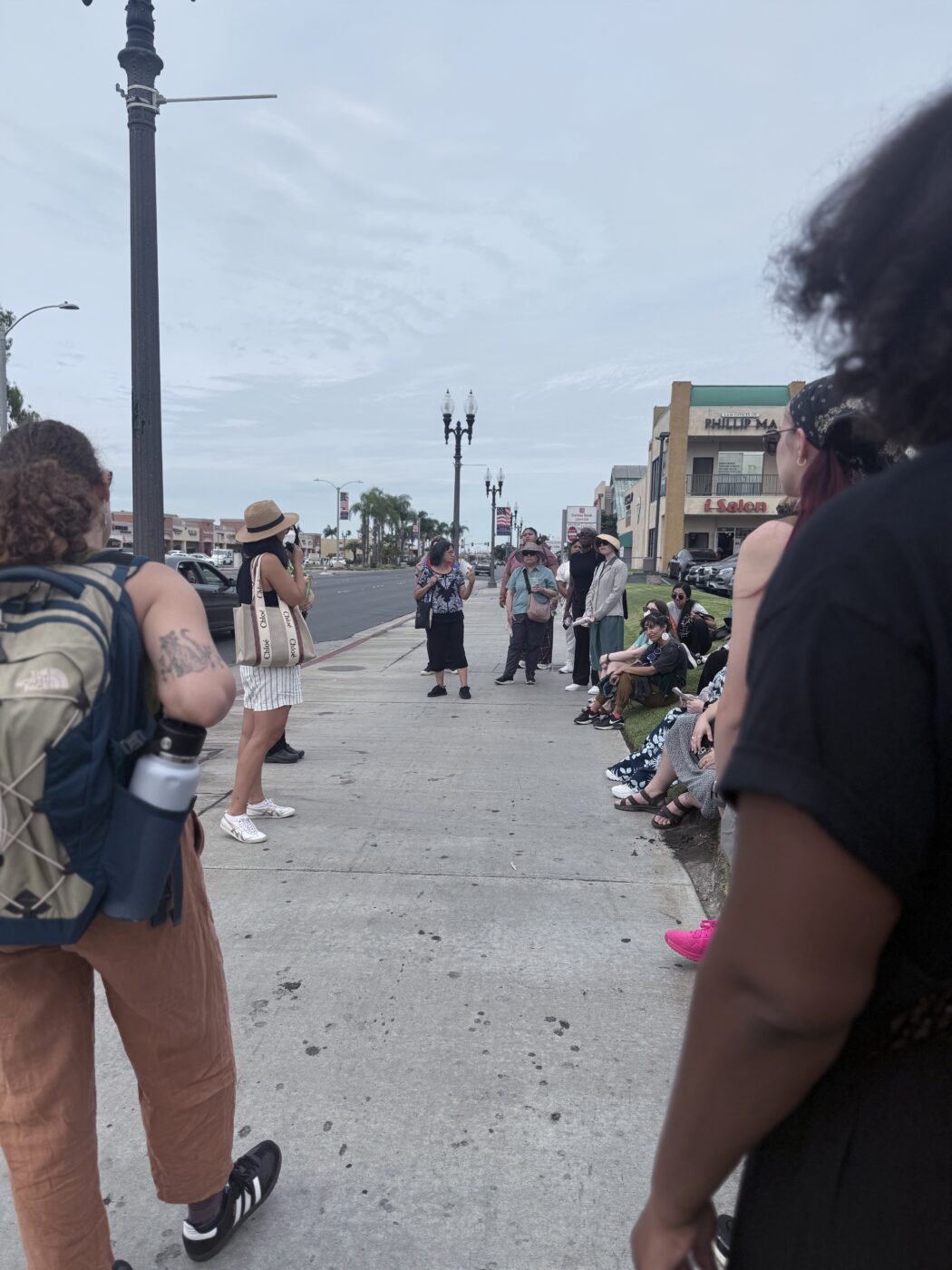
The Society of American Archivists (SAA) conference this last August was my first time getting to attend a professional conference. Following the excitement of getting to travel to Anaheim, California for the first week of the fall semester, the three days of panels and presentations were an amazing introduction to the type of event and what can be shared.
The upcoming 250th anniversary of the United States played a big thematic role for the conference, with a focus on the whole history of the nation, not just the dominant narratives. From the preservation of diverse histories to fostering a sense of belonging for the full range of populations a given archives serves, all in the face of anti-diversity laws and the threats of autocracy hindering our work, the panels painted a full portrait of purposeful, active inclusion of all types of people and stories within the archives. My favorites were centered around queer archives and Indigenous archival sovereignty. For the former, we heard cases about the OUTWORDS Archive, the International Gay Rodeo Association, and the Sage Singers and their community archive. Across all three instances, care was given to the balance between redaction for safety versus censorship of queer experiences, the historical reticence to trusting institutions with stories and artifacts, and the intersection with Critical Aging Studies for queer elders. This was the highlight of the conference for me as a queer MLIS student simply for the wealth of knowledge and leads to further study within and adjacent to the field.
The panel on Indigenous archival sovereignty had Alex Soto of ASU Library ’s Labriola National American Indian Data Center, who I had met through an open scholarship internship in the spring; it was very heartening to see that Arizona had the privilege of voices at the forefront of Indigenous rights in libraries/archives. The speakers, including Indigenous people from Canada and Australia, introduced the varying laws and principles that guide the collection and preservation of Indigenous cultural and intellectual property. They all spoke to how just following the letter of policy is not enough and how actually developing relationships with the communities should be the priority in ensuring archives are held accountable for their handling of cultural knowledge. Indigenous data sovereignty has been central to my degree focus, so it was beyond useful to see how it extends into archival work specifically.
—
Not long after, in mid-October, the Arizona Library Association (AzLA) conference took place in Tucson, Arizona, thankfully right in the city where I’m based for my MLIS, so attending was accessible. Across the two days, I was delighted to find many of the same topics and concerns shared across the two conferences despite the separate professional silos of the associations.
The keynote speaker, Lydia Otero, had been essential in my learning of local Tucson history, their books assigned by my current internship with the Mexican American Heritage and History Museum. They spoke to how intersectionality, when considered in how to expand inclusion within libraries, must include place–both where one currently lives and where one grew up. Following their opening, many of the panels echoed back the diversity efforts and legal safeguards from the SAA conference. We got to hear about the Navajo Nation Library and Apache College Library, as well as discourse surrounding digital archiving for Indigenous Communities. Alex Soto was at AzLA, as well, giving a more focused discussion about works going on within Arizona’s tribal libraries and their collaboration with Labriola. ASU Library also had a panel on open scholarship, presented by the supervisors of my previous internship. Not only was it great to connect again and further develop professional relationships across the state, but also seeing how the work I helped on was continuing beyond my involvement showed the greater web of the field and all the effort so many people put into it.
At the end of the SAA conference, despite seeing my fellow and former FOCAS interns present, I was so sure that I was not yet at a stage in my professional or academic career to be doing the same, despite entering my second and final year of my degree. Yet after attending AzLA, I’m not sure if it was the smaller size of the conference or repeated exposure to the setting for presenting, but I now feel more confident to bring my own work as a panel or discussion, whether it is within my FOCAS internship or with my fellowship workshop in the university makerspace. We’ll see what next year brings!